In the summer of 1998, I decided I wanted to compete in the annual Running Journal Grand Prix Series. I wasn’t too far removed from college, so I was looking for something to help dictate my racing schedule the way college meets had in the past, so this, along with the fact that I had a background in racing motocross which is very heavily series-oriented, made the idea very appealing to me. When I first decided to give the series a shot, I didn’t have especially high goals. I knew the series was fairly competitive and involved some major races throughout the Southeast, so I figured if I could place in my age group that would be a pretty good accomplishment.
The first race of the series was in late August of 1998 and was the Parkersburg Half Marathon, which also happened to be the US National Championship that year. I’ve written in the past about how this particular race was a game-changing moment for me, so I won’t go into that again. Suffice it to say I ran better than I thought I would, while also being severely humbled. I saw some potential, however, and that was the beginning of the motivation that would drive me for some time to come. The next race of the series was in Anderson, SC, and was a midnight race called the Midnight Flight 10k. It was my first encounter with the man who had won the Open/Overall Division of the series the past several years, a guy from Atlanta named Malcolm Campbell.
Malcolm, a native of Scotland, was quite the accomplished runner, having achieved All-American accolades and run in World Championships as well as Olympic Trials, and I stayed nowhere near him in that race. The next race of the series, however, was the Virginia Ten Miler in Lynchburg, and I had a great race that day, running under 55 min on that ridiculously hilly course. After the race, I had run all three races of the series so far, something many of the other fastest runners had not, so much to my surprise, I found myself leading the series, not just in my age division but overall. I retained that lead most of the rest of the way. In fact, I held it right up to the very last race on Memorial Day in 1999 at the Cotton Row Run 10k in Huntsville, AL. I relinquished my lead that day, however, and wound up with a second place finish in the Open/Overall division just a few points behind multi-time champion, Malcolm Campbell, who I’d gotten to know a little over the course of the series. I pushed him all the way to the end, and while I would have liked to have taken the overall series title, I was pretty happy with the result. I never thought I would come that close to winning the series outright, and the competition had pushed me to become a much better runner than I was 9 months earlier.
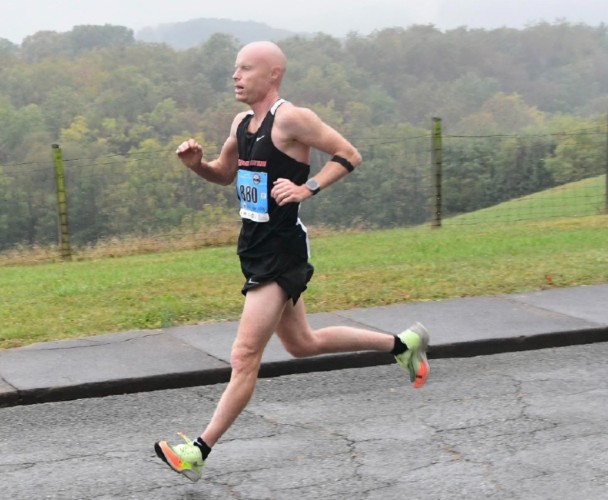
I had planned to continue competing in the series and try to eventually get the overall title, but for various reasons, that was my one and only attempt. As a result, I didn’t see much more of Malcolm Campbell when it came to racing against him, but I did keep track of him in looking at results of bigger races all over the East Coast. Sometime a few years ago, I noticed I didn’t really see his name much anymore, and I sort of wondered what happened to him. Then, as he turned 40 back in 2010, I started to see his name again, and the results attached to his name started to get faster and faster. He was a Masters runner now, and a good one at that, racking up US Championships among other accolades.
I write all this because I recently ran across an interview with Malcolm on the Running Times web site. That article can be found here. It contains some interesting information, and as I approach that category myself, I really enjoy reading about the better Masters runners, especially those like Malcolm whose current times aren’t all that much slower than those he ran as an open runner 10-15 years ago. I think what popped out to me most was the fact that Malcolm actually increased his overall mileage as he approached the Masters category. Normally you see the opposite, as most Masters runners add extra recovery to prevent injury. That just goes to show that, like Malcolm himself says in the interview, the best way to train is unique to each individual.
Anyway, just a blast from my past that got me to thinking. I sure would like to be able to stay as close to Malcolm now as I was able to a dozen years ago. Don’t know if I can get there or not, but there’s only one way to find out. Time to get to work!

No comments:
Post a Comment